Most inboxes are crowded. Readers make rapid decisions about what to open, what to skim and what to delete. That means an email does not earn attention simply because it was sent. Every element must justify the reader’s next second.
Strong email copy is not built on clever wording alone. It combines relevance, timing, structure, trust and a clear reason to act.
Why many marketing emails are ignored
Emails often fail because they begin from the sender’s perspective instead of the reader’s. The message focuses on what the company wants to announce rather than what the recipient needs to understand.
Common problems include:
- Subject lines that sound generic or exaggerated.
- Long introductions before the message becomes useful.
- Too many competing ideas in one email.
- Weak personalization that feels automated.
- Calls to action that are unclear or low-value.
- Heavy design that distracts from the core message.

Write subject lines that create relevant curiosity
The subject line has one job: earn the open from the right reader. It should communicate enough value to feel relevant without trying to explain the entire email.
Be specific
Clear subject lines usually outperform vague promises because readers understand what they are being invited to consider.
Avoid empty urgency
Urgency is useful only when it is real. Constant pressure weakens trust and trains subscribers to ignore future messages.
Match the email content
A strong subject line should not create expectations the body cannot satisfy. Misleading opens damage long-term engagement.
Use curiosity carefully
Curiosity works best when it is connected to a meaningful benefit, problem or insight—not when the message becomes confusing.
The subject line earns the open. The body must prove that opening the email was the right decision.
Make the opening immediately useful
The first lines should confirm relevance. Avoid long greetings, unnecessary background and statements the reader already understands.
A strong opening often does one of the following:
- Names a specific problem.
- Introduces a useful opportunity.
- Shares a meaningful result or observation.
- Connects directly to the reader’s context.
- Explains why the message matters now.
The reader should understand the direction of the email within a few seconds.
Build the email around one clear message
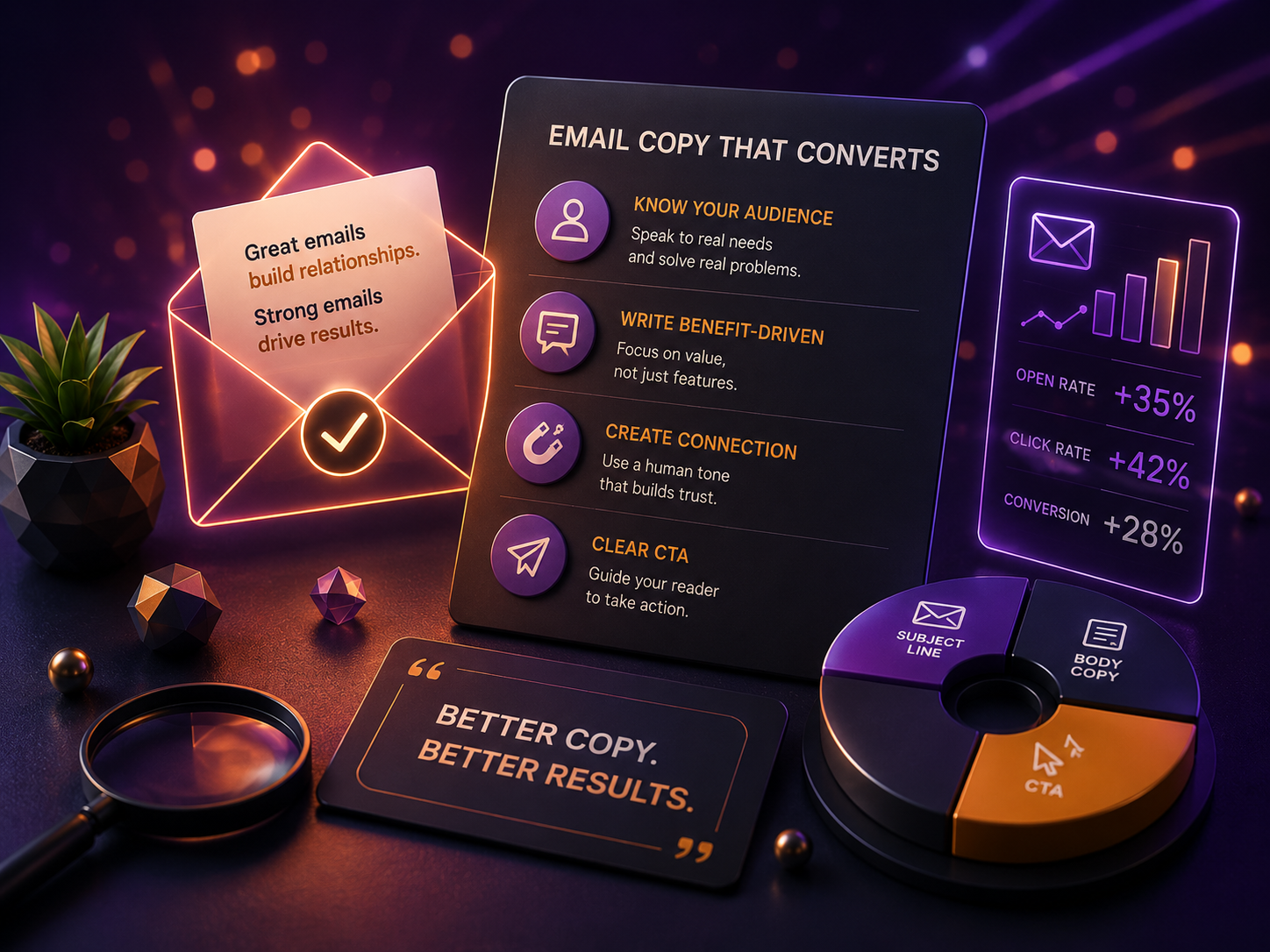
Effective emails usually have one dominant purpose. When too many goals compete, the message becomes harder to understand and easier to ignore.
Lead with relevance
Explain why the message matters to this audience before describing the offer, update or request.
Develop the value
Show the practical benefit. Explain what changes for the reader and why that change is meaningful.
Reduce unnecessary detail
Include enough information to support the decision. Move secondary details to the landing page when possible.
Use visual hierarchy
Short paragraphs, descriptive subheadings and carefully placed emphasis help readers understand the email quickly.
Create calls to action that feel clear and valuable
The call to action should explain what happens next. Generic labels such as “Click Here” provide less information than specific actions such as “View the Guide”, “Compare the Plans” or “Start Your Application.”
Strong calls to action are:
- Specific about the next step.
- Consistent with the email’s promise.
- Easy to find without overwhelming the page.
- Appropriate for the reader’s level of commitment.
- Supported by enough context to feel safe and worthwhile.
A single primary action usually creates more clarity than several equally prominent buttons.
Final email copywriting checklist
Subject line
Is it specific, relevant and consistent with the body?
Opening
Does the first paragraph immediately establish value?
Main message
Is there one clear purpose throughout the email?
Reader benefit
Is the practical value easy to understand?
Call to action
Does it describe the next step clearly?
Final review
Is the email concise, accurate and easy to scan?
The best email copy does not demand attention. It earns attention by being relevant, clear and genuinely useful.