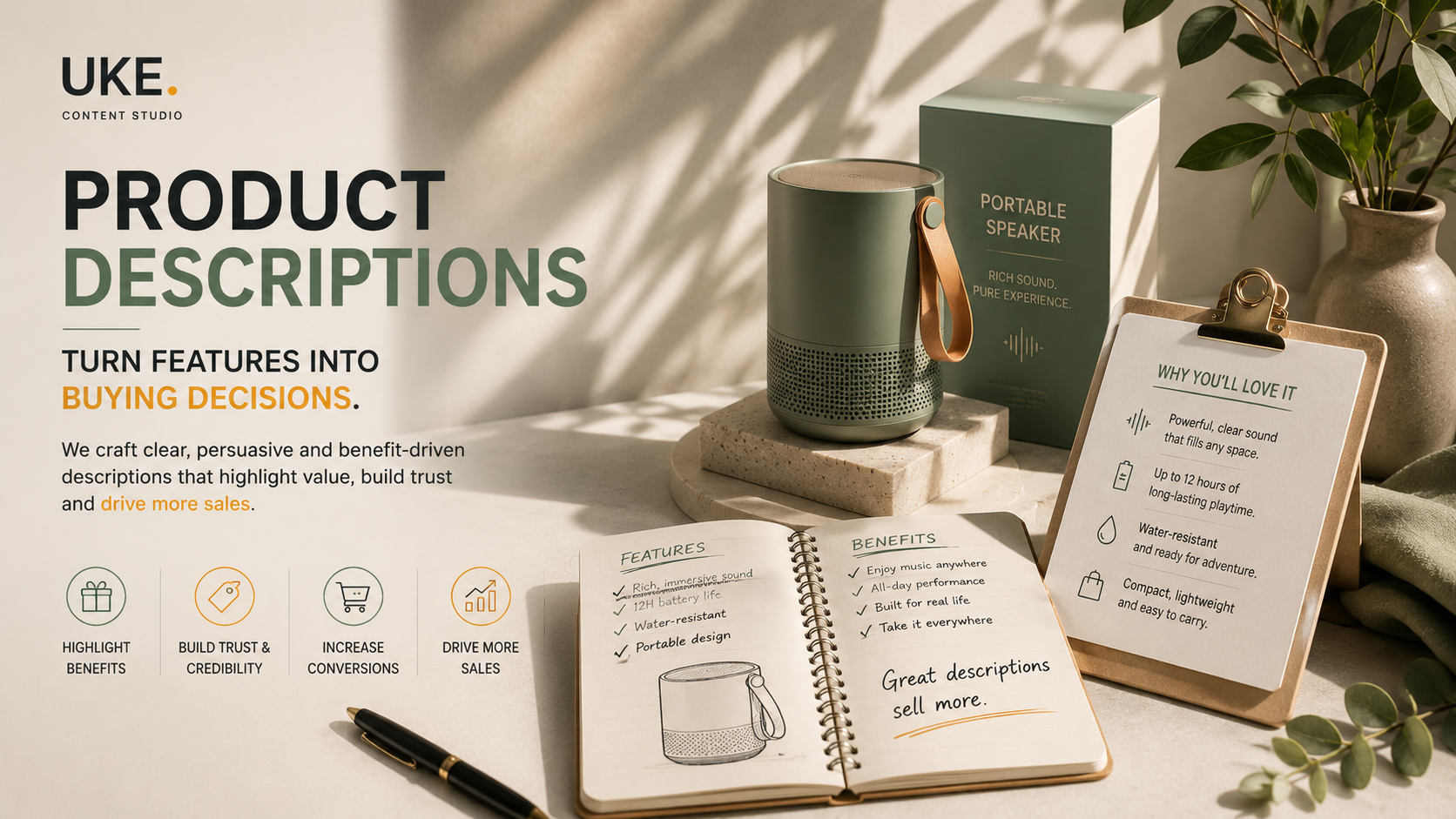
A product page must answer the questions a customer cannot ask in person. The description should reduce uncertainty, explain value and help the reader imagine the product in use.
When the copy feels vague, exaggerated or incomplete, customers often assume the product itself may be equally unreliable.
Why product descriptions directly affect trust
Customers use product copy to judge whether the seller understands the item, the audience and the buying decision. Clear language signals competence. Careless language introduces doubt.
A strong description should help the reader understand:
- What the product is and who it is for.
- Which problem it solves or need it supports.
- How its features create practical benefits.
- What makes it different from similar alternatives.
- What the customer should expect after purchase.
Mistake 1: Listing features without explaining benefits
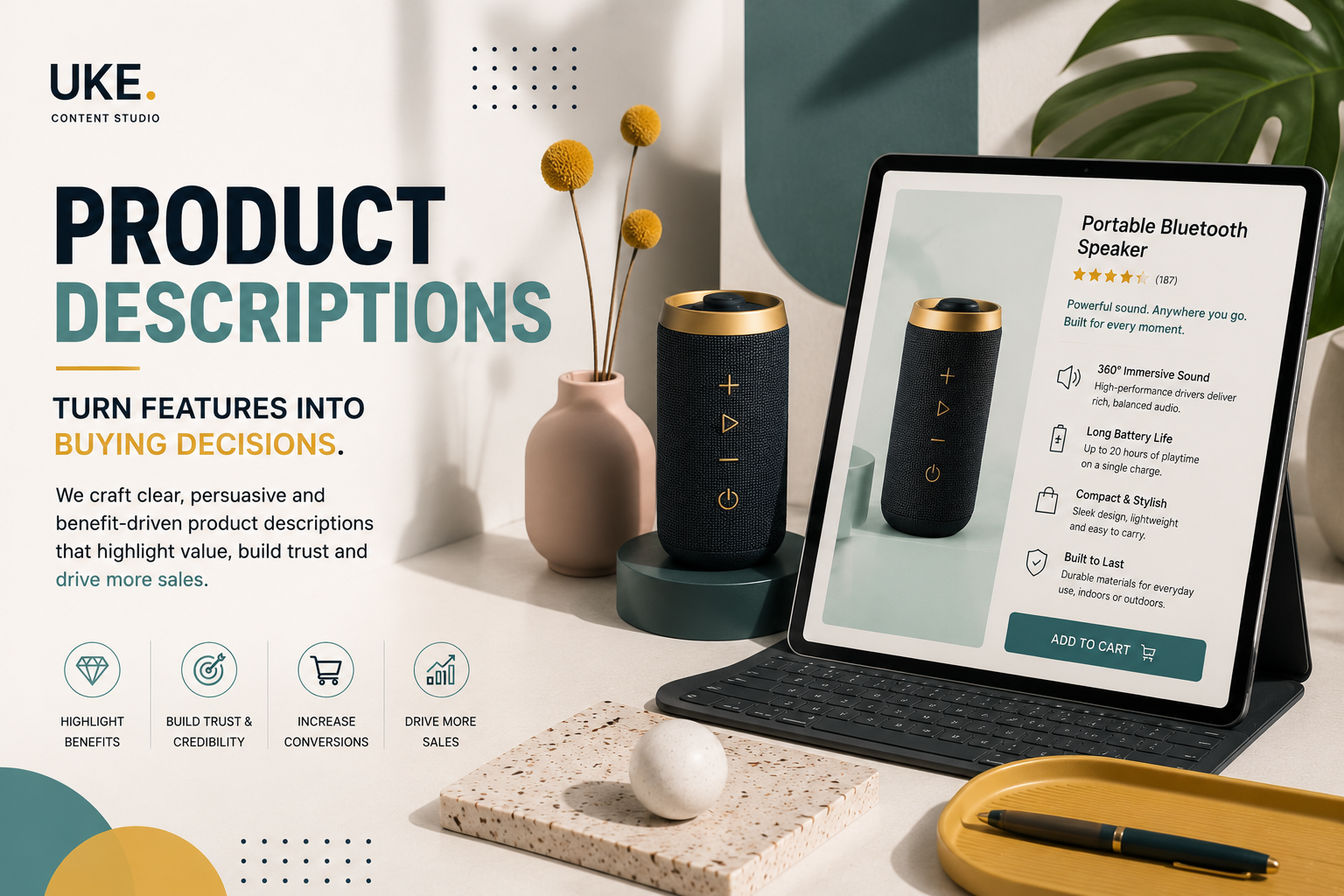
Features describe what the product has. Benefits explain why those features matter. Customers usually need both.
For example, “made with reinforced stitching” is a feature. “reinforced stitching helps the bag handle daily use without losing its shape” connects that feature to a customer outcome.
Translate specifications into real-world value
Ask what each feature changes for the user. Does it save time, improve comfort, reduce risk, simplify maintenance or increase durability?
Avoid unsupported promises
Benefits should be credible and connected to the actual product. Exaggerated claims weaken trust instead of increasing desire.
Customers do not buy a specification. They buy what that specification allows them to experience.
Mistake 2: Using generic language that could describe anything
Phrases such as “high quality,” “premium design” and “perfect for everyone” provide little evidence. They sound familiar because they appear on thousands of product pages.
Specific details create a more believable picture. Instead of saying a product is durable, explain the material, construction or use case that supports durability.
Replace adjectives with evidence
Show what makes the claim true. Measurements, materials, compatible uses and design decisions are more persuasive than unsupported praise.
Write for a defined customer
Copy becomes stronger when it reflects the needs of a specific buyer. A travel product, professional tool and luxury accessory should not speak to the customer in the same way.
Mistake 3: Leaving out details required for the decision
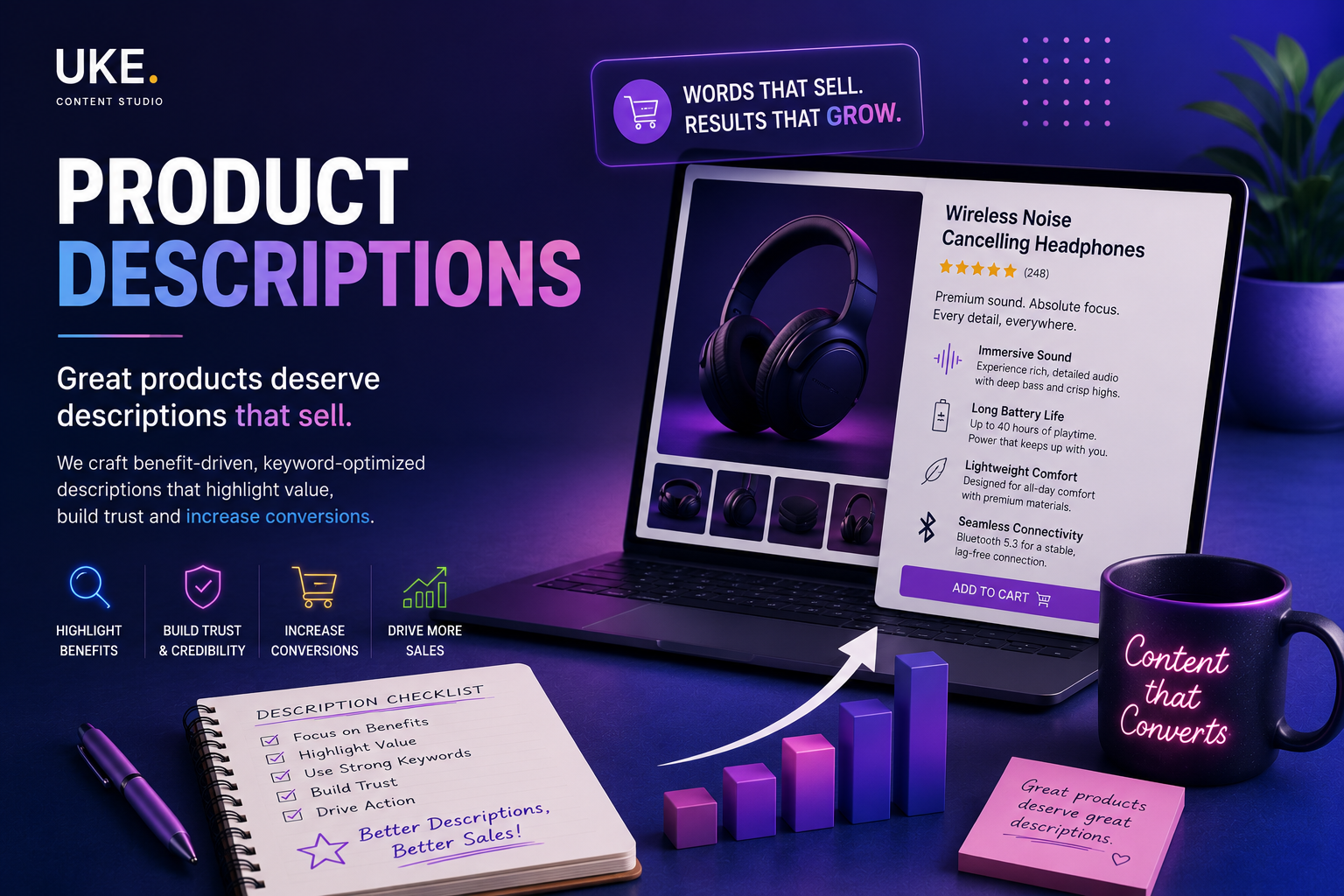
Missing information creates friction. Customers may leave the page to search elsewhere, delay the purchase or choose a competitor that explains the product more clearly.
Important details may include:
- Dimensions, weight and material.
- Compatibility and technical requirements.
- Care, installation or maintenance instructions.
- What is included in the package.
- Use limitations or important conditions.
- Delivery, warranty or return information where relevant.
Reduce avoidable uncertainty
The description should anticipate the questions most likely to stop a customer from purchasing.
Do not bury essential information
Important details should be easy to locate. Use clear headings, bullets and concise paragraphs instead of hiding everything inside one large block of text.
Build a product description around the buying journey
A useful structure guides the reader from recognition to confidence. The exact format may vary, but the page should usually include:
1. A clear opening value proposition
Identify the product, intended user and primary benefit without a long introduction.
2. Benefit-focused feature sections
Explain how the product’s characteristics improve the customer’s experience.
3. Relevant specifications
Provide the factual information needed to compare and decide.
4. Trust-supporting details
Include care information, materials, usage conditions and other facts that reduce uncertainty.
5. A clear next step
The call to action should feel like the natural conclusion of the information, not an abrupt demand.
Final product description quality checklist
Product clarity
Can the customer quickly understand what the product is?
Customer relevance
Does the copy speak to a defined need or audience?
Benefits
Are features connected to meaningful customer outcomes?
Specific details
Are claims supported by materials, measurements or evidence?
Decision support
Is the information needed to buy confidently available?
Readability
Is the content structured for easy scanning?
Strong product copy removes doubt by making the value, use and expectations clear. Trust grows when the description feels precise, honest and written for a real customer.